Recursos destacados
Publicaciones
The Natural Capital Accounts (NCA) for Forests covering the period 2016 to 2020
Informes técnicos
This report highlights the changes in animal populations, their use, and partial accounts for the...
Informes técnicos

The Rapid Environment Economic Assessment (REEA) model can be used to analyse government investment...
Recursos más recientes

Capturing Coral Reef & Related Ecosystem Services (CCRES) project - Resources
The Capturing Coral Reef & Related Ecosystem Services (CCRES) project is working to ensure the long term sustainability of these coastal ecosystems with models, tools and knowledge products to support planning. At the same time the project seeks to unlock new, sustainable income streams for the communities which rely on these ecosystems.
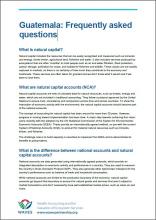
Guatemala: Frequently Asked Questions
Frequently Asked Questions about natural capital accounting work in Guatemala.
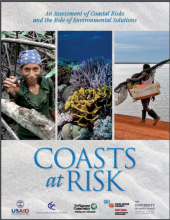
Coasts at Risk: An Assessment of Coastal Risks and the Role of Environmental Solutions
This report makes clear that attention to natural capital — improving coral reefs and mangroves that buffer shores and improving fisheries to enhance food security — could also go a long way toward reducing the human cost of coastal hazards.
WAVES Annual Report 2013
The Global Partnership on Wealth Accounting and the Valuation of Ecosystem Services has made good progress on mainstreaming Natural Capital Accounting in national accounts and development planning. The 2013 Annual Report summarizes the momentum in five WAVES partner countries (Botswana, Colombia, Costa Rica, Madagascar, and the Philippines), as well as the widespread global interest in NCA.
Users and Uses of Environmental Accounts: A Review of Select Developed Countries
This report summarizes the results of a review of countries that have the longest histories of work in the field.
Natural Capital at Risk
This paper is intended to underpin a more sustainable economy and healthy environment via fostering a greater understanding of Australian businesses' dependency on natural capital, and by encouraging and facilitating discussion within the business community about where they are most likely to be exposed to risks related to natural capital.