Featured resources
Publication
The Natural Capital Accounts (NCA) for Forests covering the period 2016 to 2020
Technical Report
This report highlights the changes in animal populations, their use, and partial accounts for the...
Technical Report
The Rapid Environment Economic Assessment (REEA) model can be used to analyse government investment...
Latest resources

WAVES Annual Report 2015
WAVES is a global partnership that aims to mainstream natural capital in development planning.
Ecosystem Natural Capital Accounting - Principles and Framework
Presented at the sub-regional capacity building workshop on sustainable finance and resource mobilization for biodiversity for CARICOM member states; St. John's, Antigua and Barbuda, 18 - 21 May 2015
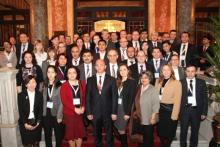
Natural Capital Accounting Regional Workshop for the Europe and Central Asia (ECA) Region
March 9-11, 2015, Pera Palace Hotel, Istanbul, Turkey
Organized by The World Bank and Turkish Ministry of Development
With cooperation from Statistics Netherlands, the U.N. Economic Commission of Europe, and the United Nations Development Programme (UNDP)
Objective: NCA is an important tool to inform policy decision making and foster transitions towards inclusive and green growth models. To construct accounts, countries need training materials, guidance, and the ability to share ideas and information.
System of Environmental-Economic Accounting (SEEA) 2012—Central Framework
The System of Environmental-Economic Accounting 2012—SEEA Central Framework, which was adopted as an international standard by the United Nations Statistical Commission at its forty-third session in March 2012, is the first international statistical standard for environmental-economic accounting.
Policy Briefing: Water accounts inform policies
NCA provides the data needed to design water policies that improve long-term resource management.
Country Brief: Guatemala
Accounts show that Guatemala has been reducing and depleting its resources over the years with inadequate public expenditure and planning to counter the trend.