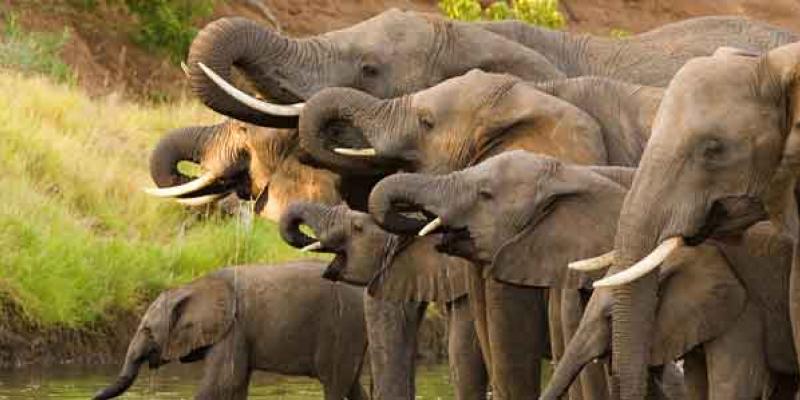
Botswana’s vast stock of natural resources — a combination of minerals, energy, protected areas, crops, pastureland and non-timber forest products — account for one-third of the country’s total wealth and underpin many important contributions that drive the economy such as nature-based tourism, mining and agricultural activities.
Natural capital accounting (NCA) can help the government determine the true value of those natural resources, optimize their use, and determine how they can be used to diversify the economy and reduce poverty.
WAVES in Botswana
The WAVES partnership enables Botswana to fill key information gaps to support policy dialogue and improve economic decision-making.
As a core implementing country, Botswana has access to international expertise to build their own capacity to be able to construct the accounts regularly.
Botswana is working on four priority areas for NCA:
- Water Accounts: To better assess the availability, uses, and economic contribution of water.
- Tourism Component of Land and Ecosystem Accounts: To inform the management of ecotourism and land use in four key ecosystems: Okavango, Chobe, Makgadikgadi Pans, and Central Kalahari.
- Mineral Accounts: To help ensure appropriate decisions are made regarding the investment of mineral revenues to provide for future economic growth.
- Energy Accounts: To determine the optimal energy mix for the future and examine the role of Botswana’s coal in a green economy.
- Macroeconomic Indicators of Sustainable Development: To develop indicators like adjusted net national income, adjusted savings, and national wealth accounts to assess the prospects for long-term, sustainable growth.
The Story So Far
The first task of WAVES Botswana was to review data availability, gaps, and lessons from previous natural capital accounts with the ultimate aim of being able to institutionalize NCA.
The Government welcomed preliminary results from the first water accounts, and a second phase is underway. Work has begun on ecosystem, mineral and energy accounts.
The WAVES-Botswana steering committee provides regular updates to the Botswana Economic Advisory Council (BEAC), a ministerial-level group from the government and private sector chaired by Botswana’s President Ian Khama. In 2014, for the second year in a row, President Khama highlighted the importance of NCA to Botswana’s economic development in his annual State-of-the-Nation address.
The Department of Water Affairs has established a water accounting unit. A unit has been set up within the Macroeconomics Policy Division of the Ministry of Finance and Development Planning to coordinate NCA objectives across relevant sectors. Some of the preliminary findings emerging from accounts can be found here.
WAVES lead government agency
Ministry of Finance and Development Planning
Country steering committee
Representatives from the: Ministry of Finance and Development Planning (Chair); Ministry of Environment, Wildlife and Tourism; Ministry of Lands; Ministry Of Minerals, Energy and Water Resources; Ministry of Agriculture; Ministry of Infrastructure, Science and Technology; the Botswana Confederation of Commerce, Industry and Manpower; and Botswana Tourism.
Country Coordinator
Edwin Itshekeng, Ministry of Finance
Botswana Advisor
Ms. Portia Segomelo
World Bank Contact
Glenn-Marie Lange